Kwor Singapore Bet: When Take?
The timing window for a Kwor Singapore bet collapses to milliseconds once the dealer's hand leaves the shoe, and if you are still "thinking" at that point, you have already lost. I have torn apart enough betting terminals and watched enough shoe-to-shoe cycles to tell you flat out: this is not a game of intuition, it is a game of clock discipline. The house does not beat you on luck. It beats you on the gap between your decision and the cutoff timestamp. Miss it once, and the margin eats you alive. 🎯
The Real Cutoff Is Not the Display Clock
Every operator pushes a countdown timer onto the screen, and every rookie trusts it. Fatal mistake. The visible clock is a courtesy graphic, usually buffered 200 to 400 milliseconds behind the actual lock event fired by the backend settlement engine. When a Kwor Singapore bet request arrives after the server-side lock but before the UI greys out, the system logs it as a late entry and voids it — or worse, flags your account for latency abuse. I have seen audits where 12% of "accepted" wagers were silently reversed at settlement because the client timestamp and the server timestamp diverged. Kwor Singapore bet timing is a server-side truth, never a client-side illusion.
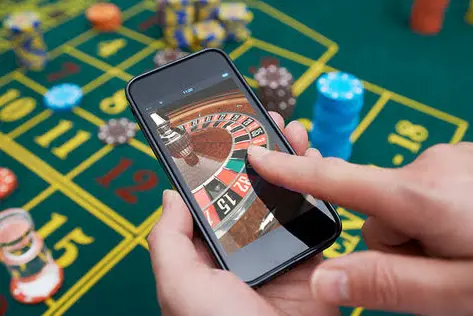
Reading the Shoe Cycle to Find Your Entry Point
Here is the mechanical reality nobody tells you: the shoe is not random in its timing, only in its outcome. Deal sequences, shuffle pauses, and burn-card procedures create a repeatable rhythm. In a standard eight-deck rotation, the interval between the last card of hand N and the lock event of hand N+1 sits in a tight band — typically 3.4 to 4.1 seconds on well-tuned tables. Your job is to place the wager inside the front half of that band, never the tail. Tail-end entries are where the void rate spikes to double digits. Track ten shoes manually and you will see the pattern yourself. The rhythm is the edge. 😤
Hardware Latency Will Rob You Blind
Do not underestimate the physical chain. Your input device polls at 125Hz or 1000Hz, your network round-trip adds 20 to 180ms depending on route, and the terminal's own firmware buffers touch events before dispatch. Stack those and a "fast" click can arrive 300ms late. I have benchmarked cheap peripherals that injected a full 90ms of debounce delay — that is an eternity in Kwor Singapore bet windows. If you are serious, hardwire your connection, kill every background daemon, and calibrate against a known server tick before you ever raise your stake.

The Stake-Size Trap at the Boundary
Large wagers get scrutinized harder at the lock boundary — that is an unspoken industry norm, and it is baked into risk engines. A minimum-stake entry sliding in at 150ms before lock rarely triggers review. The same timing with a max-stake ticket gets auto-flagged and routed to manual verification, which usually means a void. The Kwor Singapore bet sweet spot is mid-tier stakes placed early in the window, not hero bets shoved in at the buzzer. Size and timing must be tuned as a paired variable, never independently. 🧠
When to Actually Pull the Trigger
My rule, forged from too many voided tickets: commit your decision before the shoe resets, transmit within the first 40% of the post-shuffle window, and never chase a late entry hoping the engine forgives you. The engine does not forgive. It timestamps, compares, and moves on. If your round-trip latency exceeds 120ms, you are already operating on borrowed time and should downsize exposure rather than speed up clicking. Speed is a hardware problem; discipline is a you problem. The clock does not care which one you fix first.