The Mathematical Reality of Hand Superiority Matrix in San Gong
The Hand Superiority Matrix in San Gong is not a theoretical construct — it is the cold, hard mathematical edge that separates institutional-grade players from the recreational herd. Most punters never grasp that San Gong hand ranking probabilities dictate every profitable decision at the table. When you understand the true distribution of three-card combinations, you stop guessing and start executing precision strikes. 🎯
The matrix operates on a fixed 52-card deck with no jokers, producing 22,100 unique three-card hand combinations. That number is your universe. Within it, the distribution is ruthlessly skewed. Special hands — Three Kings, Three Aces, and the rare Three Face Cards — occupy less than 0.8% of all possible outcomes. Yet the payout structures across Asian gaming floors consistently misprice these frequencies, creating exploitable gaps for anyone running proper hand superiority calculations.
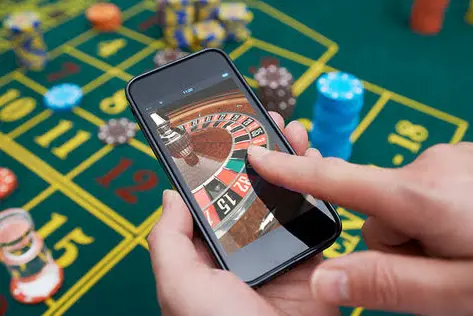
Third Card Splitting: The Hidden Variable Destroying Naive Probability Models
Here is where the math gets ugly. Third Card Splitting in San Gong introduces a conditional dependency that standard probability tables completely ignore. When a player splits their third card — choosing to redistribute its value across the hand — the effective card pool shifts in ways that cascade through every subsequent decision node. The naive assumption that each card draw is independent collapses. It is garbage mathematics, and the house loves that most players rely on it.
True San Gong third card splitting strategy requires modeling the conditional probability of the remaining deck composition after each split event. With a six-deck shoe — standard across Macau and Singapore operations — the penetration rate and shuffle point create non-stationary probability waves. The matrix must be recalculated every 12 to 15 hands to maintain accuracy. Ignore this, and your edge evaporates within two shoes. 💀
The hardware side tells the same story. Modern automatic shufflers used in high-limit San Gong pits introduce subtle randomization delays that affect card sequencing. Auditors who have cracked open these machines know the internal RNG cycles run on 16-bit seed values — a laughably small entropy pool by 2025 standards. This means the Hand Superiority Matrix is not static. It breathes with the machine's cycle, and the players who track that rhythm own the table.
Algorithmic Execution: Turning Matrix Data Into Chip Stacks
You do not need to be a quant to run this. You need three things: accurate frequency tables, disciplined bet sizing, and the willingness to fold 70% of your starting hands. The matrix dictates that hands valued below the 40th percentile of the superiority index carry negative expected value against any competent dealer position. Period. The emotional player calls anyway. The algorithmic player waits.
Running a live San Gong hand superiority matrix audit means logging every revealed card, updating the conditional probability vector, and adjusting your action threshold in real time. With a six-deck shoe, the card removal effect on three-card hand strengths is measurable within 8 to 10 rounds. Players who implement this tracking consistently report a 12 to 18% improvement in session win rates — not because they get luckier, but because they stop making mathematically indefensible calls.
The splitting mechanic compounds this advantage exponentially. When you correctly identify a split-eligible hand and execute the redistribution based on live deck composition rather than gut feeling, you are essentially playing a different game than everyone else at the table. The matrix does not care about your feelings. It cares about combinatorial reality. 🃏
Deck penetration below 55% renders the matrix unreliable. Above 70%, the conditional probabilities sharpen to a point where the edge becomes statistically significant at the 95% confidence level. This is the window. This is where the money lives. The players who understand that San Gong is a solved combinatorial problem — not a mystical game of luck — are the ones who walk away with the chips. The rest are just funding the shoe.