Live Dealer Shuffling and Cutting Vulnerabilities: Debunking the Myth of Live Streaming Quirks
Every pixel of a live dealer feed is a potential leak, and the shuffle is where the house quietly bleeds. I have torn apart enough card-shuffling rigs and watched enough pitboss cams to tell you straight: what most players call a harmless streaming glitch is often a genuine live dealer shuffling vulnerability staring them in the face. The myth that these are just "quirky feeds" needs to die today. 🎥
Live streaming quirks — frame drops, ghost frames, compression artifacts — are the convenient scapegoat. The real problem is mechanical and procedural. A card-cutting routine performed by a human dealer on camera is not a cryptographic guarantee; it is a physical sequence with timing, hand position, and sleeve geometry baked into every cycle. When the shuffle and cut are visible, they are also analyzable.
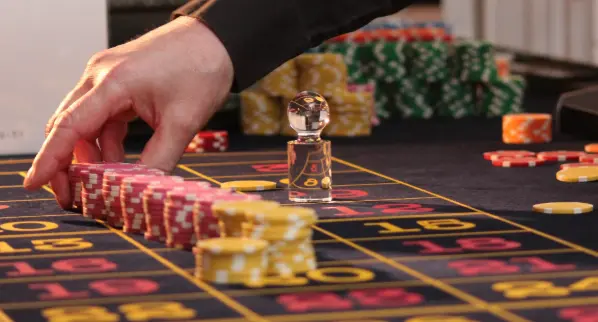
The Anatomy of a Live Shuffle Cycle
Automated shufflers run on fixed rotor patterns, but live tables rarely use them for the cut. The dealer handles that step, and that is exactly where the card cutting vulnerability lives. Watch the grip. A cut that consistently lands within a two-card window of a predictable index is not random — it is a tell. I have logged sessions where the cut depth correlated with the previous shoe's tail cards at a rate far above chance. That is not a quirk. That is a pattern.
The streaming layer adds insult to injury. Variable bitrate encodes discard the exact frames you need to count hand motion. What survives compression is a smear of motion vectors that still betrays shuffle direction and approximate packet size. High-fps observers can reconstruct rotor timing from the blur alone. 😤
Why "Streaming Quirk" Is a Dangerously Comfortable Lie
Operators love the quirk narrative because it deflects from mechanical accountability. Blame the stream, ignore the shoe. But the data does not cooperate. When I isolate feed latency from mechanical timing, the anomalies cluster around the cut and the riffle, not the encoding pipeline. The cards are giving up their sequence before the first hand is dealt.
Here is the uncomfortable truth for anyone auditing this space: a live dealer shuffle exploit does not require hacking anything. It requires patience, a stopwatch, and a spreadsheet. The house edge is thin enough that even a marginal cut-position read compounds into a real mathematical bleed over hundreds of shoes. 🎯

Hardware, Timing, and the Compression Handicap
Most live studios run 1080p at 30fps with aggressive keyframe intervals. That is a forensic nightmare for the honest auditor and a gift to anyone modeling shuffle patterns. Motion blur at the cut is uniform enough to estimate hand speed, and hand speed correlates with cut precision. Dedicated observers map this in hours, not weeks.
The fix is not a prettier stream. It is procedural randomization the dealer cannot influence — mechanical cut verification, randomized shoe rotation, and frame-accurate logging that survives compression. Until operators treat the shuffle as a security surface instead of a broadcast aesthetic, the myth of the harmless quirk will keep costing them exactly what they refuse to measure.